
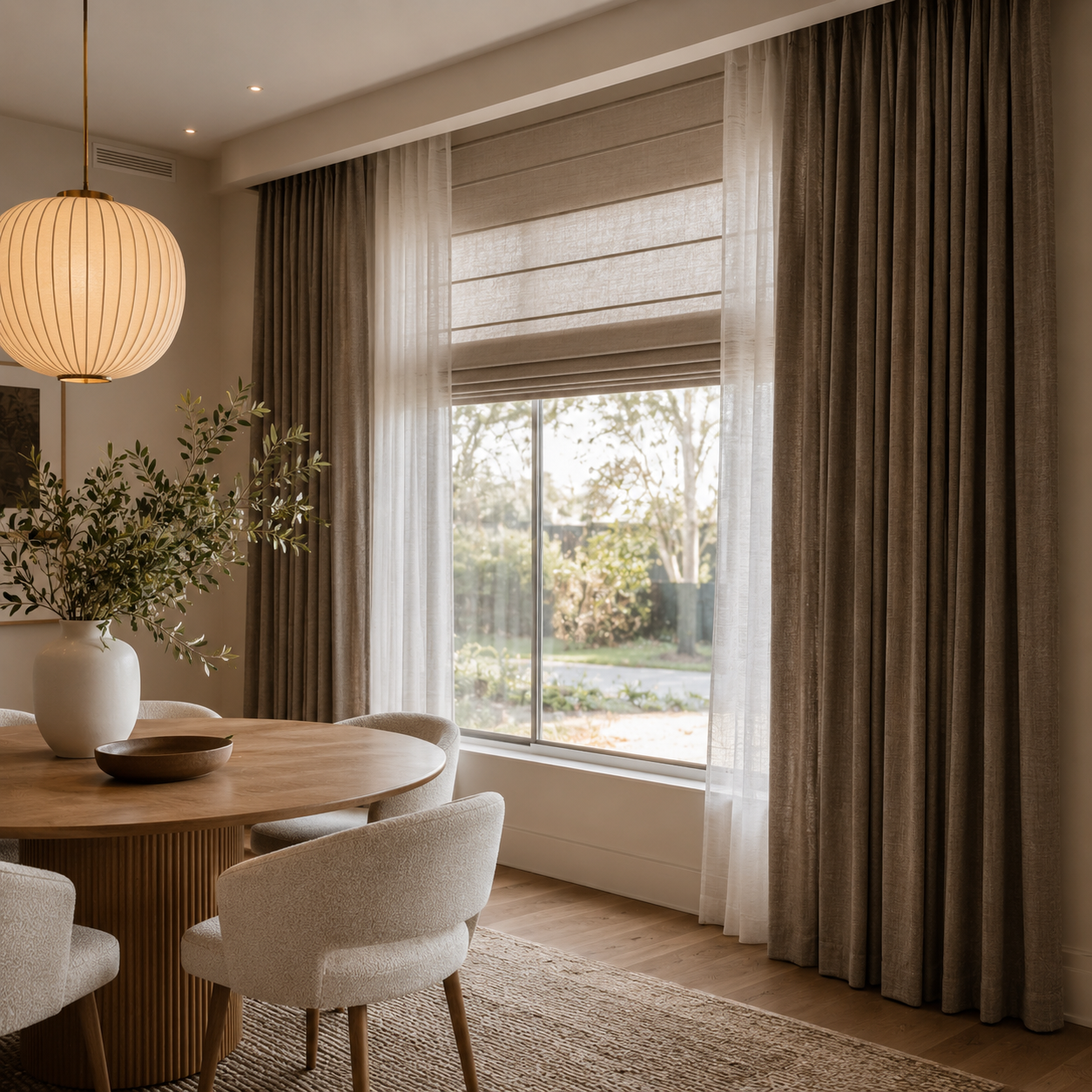
Why Layering Curtains and Blinds Matters
Insulation and energy savings
Layering creates multiple air pockets that reduce heat transfer. A blind mounted close to the glass forms the first barrier, while curtains add an extra layer that stops drafts. Together, they provide better insulation than either element on its own, meaning you stay warmer without dialling up the heater.
Light control and privacy
During winter you still want to enjoy natural light. Sheer curtains soften daylight and maintain privacy, while a blind or blockout drape can be lowered in the evening for warmth and darkness. Layering allows you to adjust each element independently, ensuring you always have the right balance of light, view and insulation.
Aesthetic appeal
Mixing different fabrics, colours and textures lets you personalise your space. From the luxurious drape of velvet to the crisp lines of a roller blind, layers add depth and interest. You can choose complementary hues that tie your décor together or create contrast for a bold design statement.
Choosing the Right Combinations
Sheer curtains with blockout drapes
Sheer curtains diffuse harsh daylight and maintain privacy during the day. In the evening, draw blockout drapes made from heavy, lined fabric to trap heat and block out cold drafts. This classic pairing suits bedrooms, living rooms and formal spaces alike.
Honeycomb blinds with drapes
Mount a honeycomb blind inside the window recess and hang curtains outside it. The blind’s cellular structure traps air next to the glass, while curtains add another thermal layer and soften the overall look. This combination offers excellent insulation and suits modern and period homes.
Timber Venetians and linen curtains
Timber or faux‑wood Venetian blinds bring warmth and texture, and their adjustable slats allow fine control over light. Pair them with light linen curtains for a breezy daytime look and added insulation at night. The contrast between timber and linen creates a relaxed yet sophisticated vibe.
Day‑night roller blinds and curtains
A day‑night or double roller blind combines a light‑filtering layer with a blockout layer, giving you two fabrics in one compact system. Add curtains for extra insulation and softness. This solution is perfect for rooms where you need flexibility – such as living areas that serve multiple functions.
Winter Styling Tips
- Coordinate colours and textures so that your layers look intentional. Choose a neutral blind as a base, then add curtains in complementary hues.
- Fit pelmets or cornices above your curtains to hide hardware and stop warm air escaping over the top.
- Mix sheer and heavy layers so that you can enjoy daylight while retaining warmth when the sun goes down.
- Invest in quality curtain rods, tracks and tie‑backs that can support the weight of layered fabrics and allow smooth operation.
- Keep your window coverings clean and dust‑free so that fabrics and mechanisms perform at their best.
Popular Layering Combinations
|
Combination |
Thermal benefit |
Style & texture |
Best uses |
|
Sheer + blockout drapes |
High; blockout layer traps heat while sheers diffuse light |
Luxurious and elegant |
Bedrooms and formal living spaces |
|
Honeycomb + drapes |
Excellent; combines cellular insulation with heavy fabric |
Modern with classic softness |
Living rooms and heritage homes |
|
Timber Venetians + linen curtains |
Moderate; wood slats add warmth and linen softens drafts |
Relaxed coastal or Scandinavian |
Kitchens and casual rooms |
|
Day‑night rollers + curtains |
Very good; multiple layers provide versatility and insulation |
Contemporary and functional |
Multifunctional spaces |
|
Layered sheers + pelmet |
Good; retains heat while allowing filtered light |
Soft and romantic |
Dining rooms and lounges |
FAQ
Can I add curtains over existing blinds?
Yes. Installing a curtain rod or track above your window allows you to hang drapes over existing blinds. This adds insulation and can update the room’s look without replacing the blind.
What fabrics are best for winter layering?
Opt for dense materials such as velvet, wool blends or heavy cotton for the outer layer. Sheers should be lightweight to diffuse light. A lined curtain paired with a textured blind provides the best of both worlds.
Will layered window coverings block too much light?
Layering gives you flexibility. Use sheers or light‑filtering blinds during the day to enjoy natural light, then close heavier layers in the evening. Adjust each layer independently to control brightness and privacy.
Do I need a double rod or track?
Using a double rod or track makes it easy to hang two sets of curtains or a blind and curtains. It keeps the fabrics separate so they move smoothly and creates a balanced layered effect.
Is layering suitable for small apartments?
Absolutely. Choose slimline blinds and lighter fabrics to avoid crowding the space. Mount curtains close to the ceiling and extend them beyond the window frame to make the room appear larger while still adding insulation
Conclusion and Call to Action
Layering curtains and blinds is a stylish way to stay warm through Melbourne’s chilly months. By combining different textures and fabrics you can tailor light, privacy and insulation to suit any room.For expert advice on creating the perfect layered look, contact TotalBlinds. Our professionals will help you mix and match window coverings that reflect your personality and enhance the comfort of your home.
Ready to enjoy a cosier, quieter home? Book your free measure and quote today.