
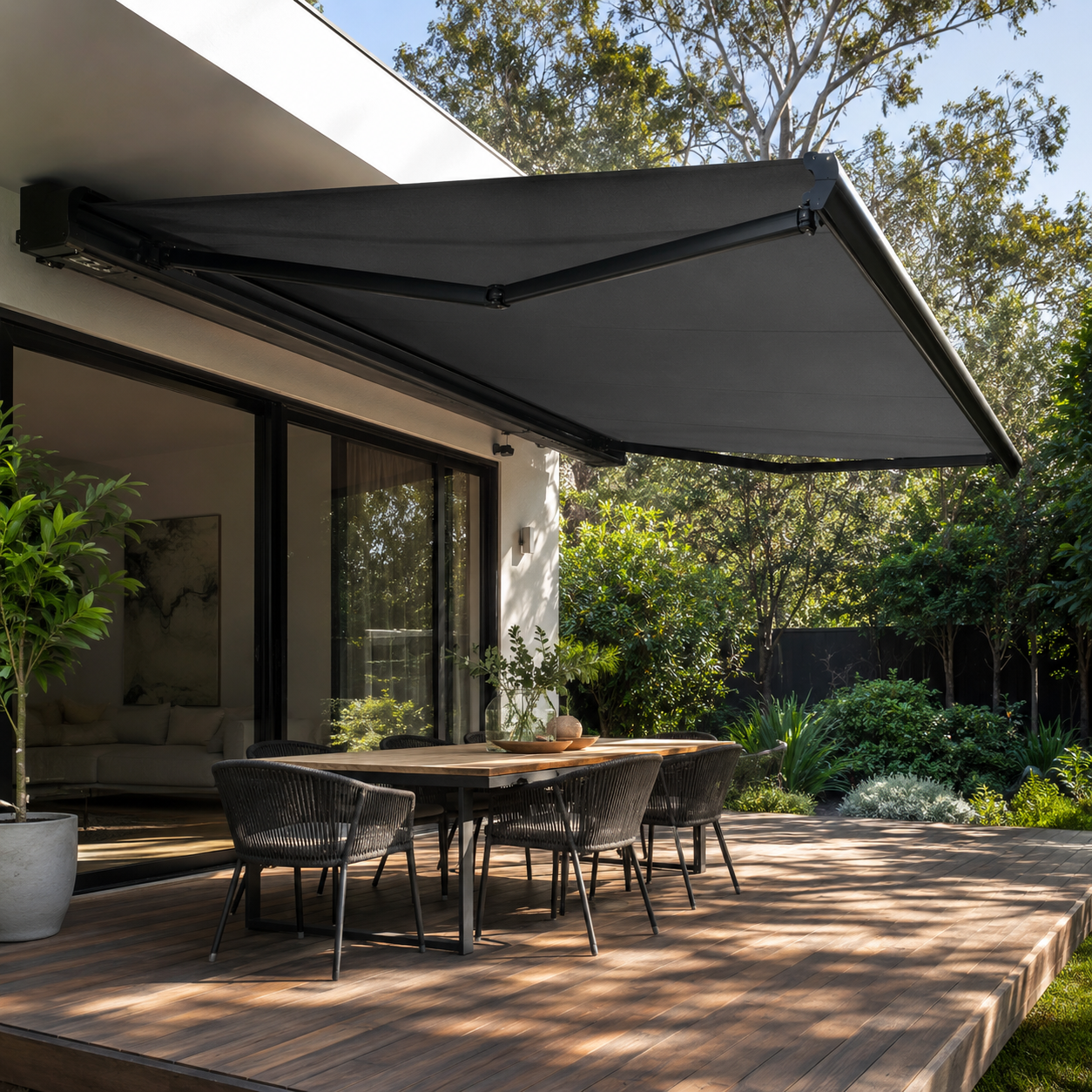
In Melbourne we love to blur the line between indoors and outdoors, but our climate often has other ideas. On some days the sun bakes the deck by lunchtime; on others the weather can turn in minutes. As a long‑time window furnishings specialist, I see many households struggling to enjoy their decks, patios and alfresco zones because they lack flexible shade. Folding arm awnings have quietly become one of the most effective ways to create on‑demand shelter for outdoor living without enclosing the space. This guide explains why they’re back in focus, where they work best and what to consider before you invest.
Why folding arm awnings are back in focus for Melbourne outdoor living
The idea behind a folding arm awning is simple: it projects out from the wall when you need shade and retracts neatly when you don’t. What makes them so appealing today is our renewed awareness of sun protection and comfort. According to the SunSmart shade guidelines, good‑quality shade can reduce ultraviolet (UV) exposure by up to 75 percent. For families with children or skin‑conscious adults, being able to create a broad patch of shade over the deck at the push of a button is invaluable. The Energy Efficient Window Coverings resource from the Department of Energy notes that window awnings can cut solar heat gain by up to 65 percent on south‑facing windows and 77 percent on west‑facing windows. Flexible shade not only protects skin but also helps to keep adjacent interiors cooler on hot days, reducing reliance on air conditioning. Beyond the health and energy benefits, folding arm awnings simply make outdoor spaces usable more often. They can be projected when the afternoon sun is harsh, retracted to enjoy winter sun, and angled to block glare without blocking views.
Projection, pitch and sun angle
Getting the projection and pitch right is crucial. Projection refers to how far the awning extends; larger decks or entertaining zones may require a projection of three metres or more. Pitch refers to the tilt of the awning arms. A steeper pitch offers more protection from low sun and light rain, while a shallower pitch allows for head clearance and a lighter feel. In Melbourne, the summer sun sits high in the sky at midday but drops quickly in the afternoon, so it pays to choose an awning that allows you to adjust the pitch. A specialist can calculate the best combination based on your deck size and orientation. If your alfresco area faces north or west, more pitch will help to block the late afternoon sun. South‑facing spaces may need less projection. A good awning supplier will discuss these variables and show you how different projections and angles affect shade patterns at various times of day.
Fabric performance and colour choice
Awnings are no longer limited to the canvas of decades past. Modern folding arm systems use synthetic fabrics such as acrylic and polyvinyl laminates that are water‑repellent and treated to resist mildew and fading. When choosing a fabric, consider both performance and aesthetics. Lighter‑coloured fabrics reflect more sunlight and create a brighter feel under the canopy, which suits courtyards with limited natural light. Darker colours absorb light and provide stronger shade but can increase the temperature under the awning. Think about how the fabric colour will relate to your exterior finishes. A more textured weave can soften hard surfaces; a smooth finish gives a clean, contemporary look. Take swatches outside and view them in natural light. Because the fabric will be visible from inside when the awning is retracted, coordinate with your interior palette as well. When in doubt, speak with a specialist who can show you samples and explain which textiles perform best in Melbourne’s variable weather and salty coastal air. For more inspiration on materials and colours, explore our dedicated folding arm awning page.
Wind, weather and how often you will use the space
Folding arm awnings are engineered to handle everyday breezes, but strong winds are a different story. If your deck is exposed to sudden gusts, choose a system with a high wind rating and consider adding a wind sensor. Sensors automatically retract the awning when wind levels become unsafe, preventing costly damage. Think about how often you plan to use your alfresco area. For occasional shading over a barbecue area, a manually wound awning may suffice. If you entertain regularly or want the convenience of shade at a moment’s notice, a motorised model with remote control or wall switch will see far more use. For year‑round enjoyment, look for options with integrated LED lighting or drop‑down valances to block low sun. Finally, factor in clearance for opening and closing doors, and ensure there is enough structural support in the wall to bear the weight of the awning and its forces in windy conditions.
Where folding arm awnings work best
Folding arm awnings excel over decks, patios and open‑plan alfresco kitchens because they provide broad, unobstructed shade without posts. They also work well over French doors or sliding doors where you want to shade the glass and protect indoor furnishings. Because window awnings can reduce solar heat gain significantly, installing one over large north‑ or west‑facing windows can cut glare and keep adjoining rooms cooler. On two‑storey homes, awnings can shade upstairs balconies without affecting downstairs light. When considering placement, look at how the sun moves over your property. A north‑facing courtyard may need a deeper projection to cast enough shade at midday, while an east‑facing breakfast terrace might only need a modest extension to block the rising sun. Avoid placing awnings under overhanging eaves, as this can restrict movement. A site inspection by an experienced awning installer will help you decide the ideal mounting height and projection for your specific space.
What to look for before you buy
Not all folding arm awnings are created equal. Start by measuring the area you want to shade and consider how far you need the awning to project without hitting posts, trees or fencing. Ask about the pitch range and whether it can be adjusted once installed. Enquire about fabric warranties and UV ratings; reputable fabrics are engineered to last many years with minimal fading. Check the quality of the arms and mechanisms – stainless steel or powder‑coated aluminium components withstand Melbourne’s weather better than cheaper alloys. If you live near the coast, look for corrosion‑resistant fittings. Ask about wind ratings and whether a wind sensor or motion sensor is available. It’s also wise to consider how the awning will be mounted. Brickwork, timber and steel each require different fixings. Finally, think about who will install the awning. A professional installation ensures the brackets are properly secured and the fabric is tensioned correctly. If you have any questions, feel free to speak with our team via our contact page.
Manual versus motorised control for everyday use
Manual awnings are operated with a simple crank handle. They cost less upfront and suit areas where you don’t expect to adjust the awning frequently. Motorised models use a small tubular motor to extend and retract the awning via a wall switch, remote control or smartphone app. Motorisation is ideal for larger awnings or for people who want to use the awning regularly without effort. Many systems also allow you to set a favourite position, so you can recall the perfect amount of shade with one touch. Sensors can automatically retract the awning if the wind picks up or extend it when the sun hits the deck. For homeowners investing in a broader smart‑home ecosystem, awnings can be integrated with lighting, heating and security systems. While a motorised unit costs more initially, the convenience often leads to far greater use. If you’re exploring motorised options for other rooms, you might also be interested in our range of motorised blinds. Whichever route you choose, ensure the electrical wiring is done by a qualified electrician and that the controls are easy for all family members to operate.
How to avoid the common mistakes
Two of the biggest mistakes I see are choosing an awning that’s too small and underestimating the wind. People often base their decision on the size of their table rather than the area they actually use. Measure the space you want to cover and allow extra projection so that the shade reaches the seating area when the sun is low. Another common oversight is ignoring structural requirements. An awning exerts significant force on the wall when extended, so it must be fixed to solid timbers or masonry, not just cladding. Always consult a professional about the load‑bearing capacity of your wall. Buyers can also be tempted by cheap hardware and fabrics. While budget models may look similar, inferior materials can sag, fade or tear after a single summer. Invest in quality components and a reputable installer to avoid costly replacements. Finally, consider the broader look of your home. A well‑chosen awning should complement your architecture rather than dominate it.
How Total Blinds helps
Choosing the right folding arm awning can feel daunting, but you don’t need to navigate the options alone. At Total Blinds we specialise in made‑to‑measure solutions that respect both your home and Melbourne’s climate. Our consultants visit your property to assess the space, take precise measurements and discuss how you want to use your deck or patio. We’ll explain the differences between manual and motorised systems, show you fabric samples and colour options, and provide honest advice about wind ratings and maintenance. Once you’re ready, our experienced installers fit the awning securely and demonstrate how to operate it. As a local business, we know the nuances of Melbourne’s weather and building types, and we stand behind our work. To explore more about our awning range, visit our Awnings Melbourne hub, or call us to arrange a measure and quote.
FAQ
Are folding arm awnings suitable for windy areas?
Folding arm awnings are designed to withstand everyday breezes, but high winds can damage any retractable product. If your property is exposed, choose an awning with a high wind rating and install a wind sensor that automatically retracts the awning when gusts become unsafe. In very windy suburbs, you may want to combine an awning with fixed shade structures to create all‑weather protection.
What is the difference between a folding arm awning and a fixed pergola?
A folding arm awning attaches to the wall and extends via articulated arms when shade is needed. It provides on‑demand cover without posts or permanent structures. A pergola is a fixed frame that may support a solid roof or vines. While pergolas offer year‑round cover, they can darken interiors and require council approval. Folding arm awnings are popular because they offer flexibility and preserve openness.
Can a manual awning be upgraded to motorised later?
In many cases yes. Some manufacturers build their awnings on modular systems, allowing a motor to be added later. However, it’s easier and more cost‑effective to choose the right control option from the start. If you think you’ll use the awning frequently or want remote control, opt for a motorised version and ensure power is available at the installation point.
Ready to transform your deck into a comfortable alfresco zone? Take a moment to consider how you use the space, the direction of the sun and the level of convenience you need. When you’re clear on your priorities, reach out to our team for a friendly, obligation‑free measure
Ready to enjoy a cosier, quieter home? Book your free measure and quote today.