
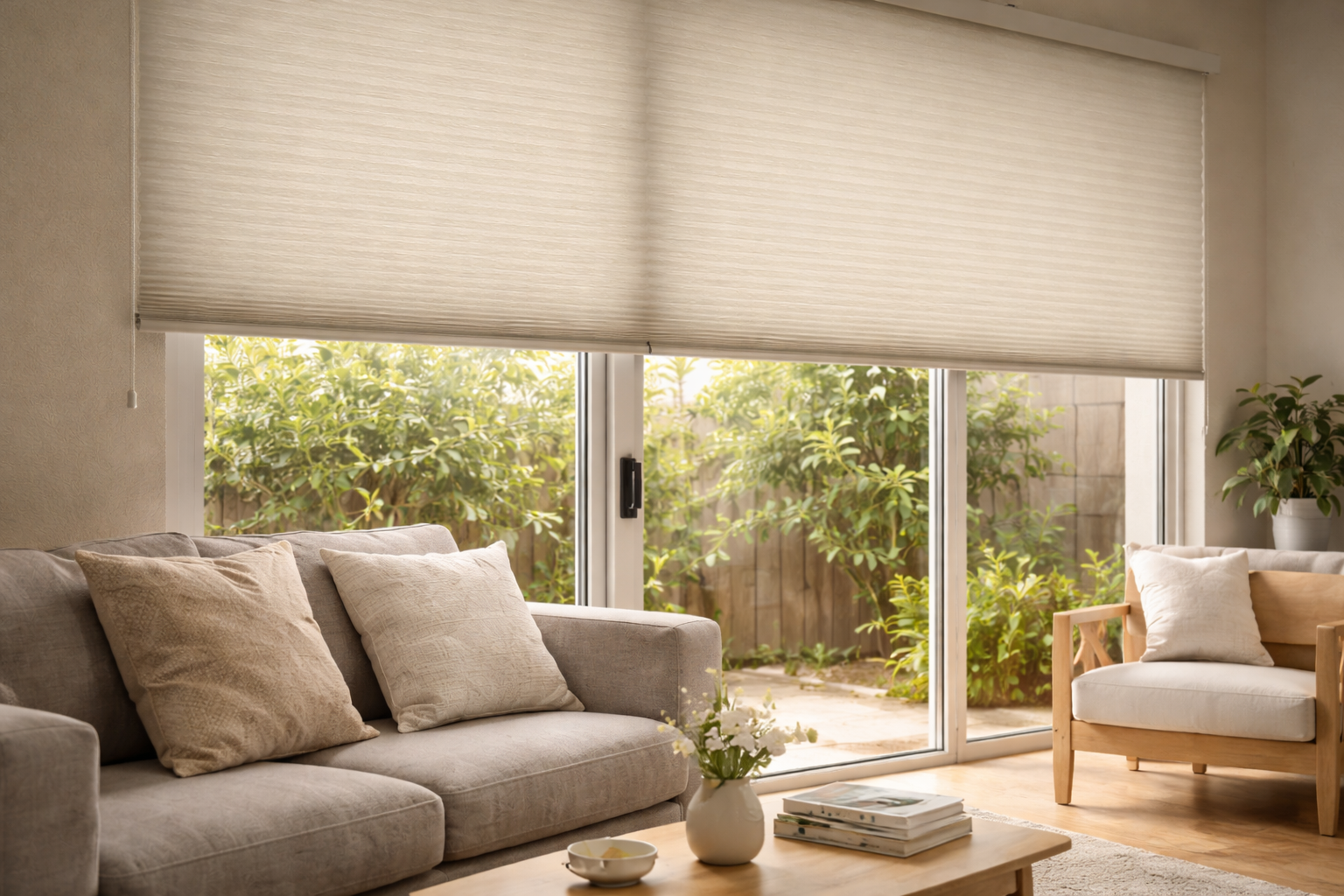
Energy-efficient blinds trap air next to the window, reducing heat transfer year-round. That keeps your home comfortable and lowers your energy bills. Styles like honeycomb blinds and blockout drapes make a noticeable difference. For more detailed advice, see the Australian Government guidance on improving window performance and the Sustainability Victoria advice on reducing heat gain through windows.
Why Windows Change Comfort (and Bills)
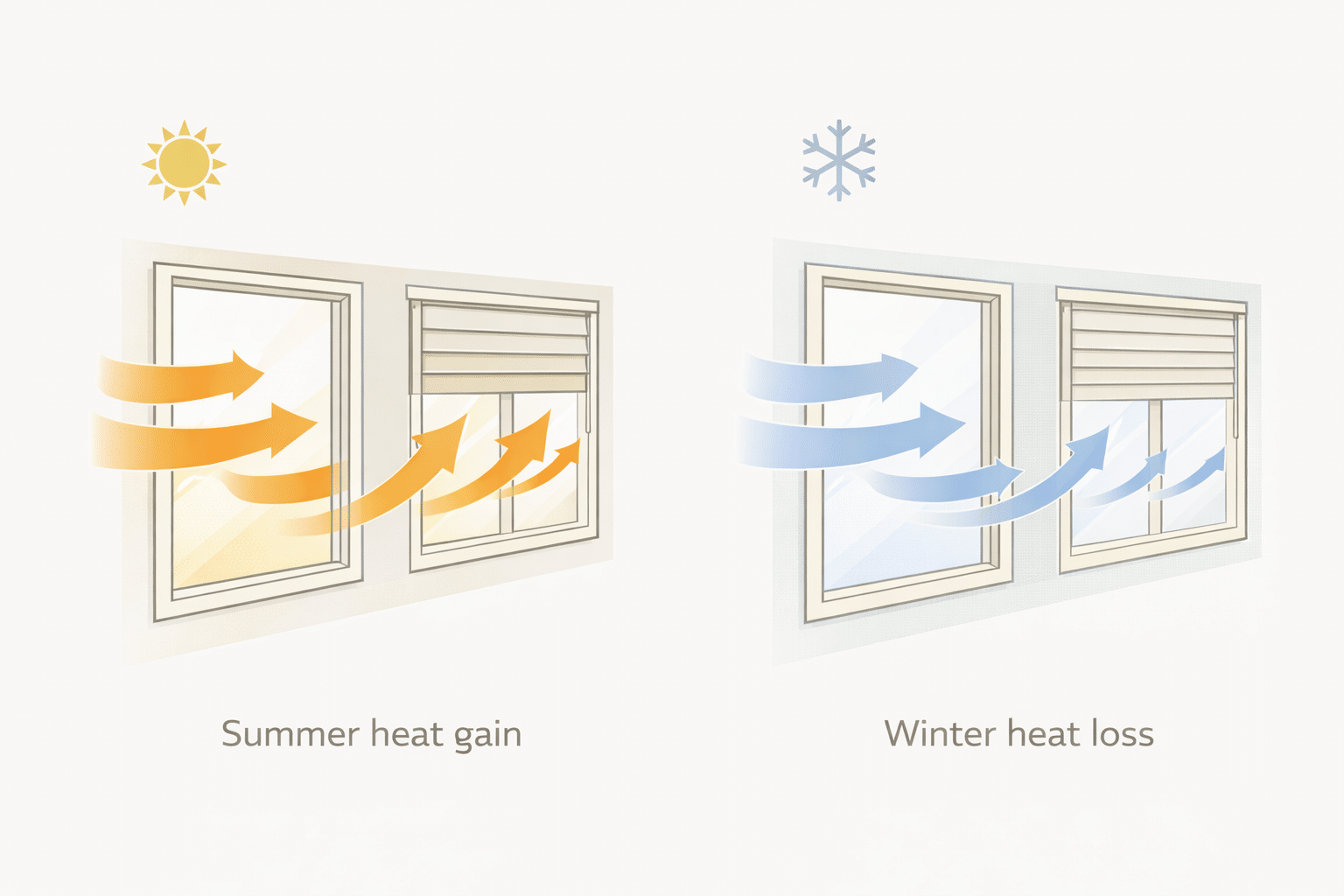
Glass lets heat in during summer and allows warmth out during winter. Single-pane windows can lose up to ten times more heat than insulated walls, and up to eighty-seven per cent of heat gain in summer comes from unprotected windows; orientation and drafts amplify these effects. Snug coverings, draught proofing and the right use of blinds-opening them in winter and closing them in summer-help control heat and reduce bills.
What to Look For in Energy-Smart Blinds
- Insulating design – choose honeycomb or cellular blinds that trap air.
- Reflective or blockout fabrics – choose materials with coatings to reduce heat gain and protect furnishings.
- Snug fit and pelmets – ensure blinds sit close with pelmets or channels to reduce draughts.
- Adjustable light control – choose styles that open, close or tilt for sun and privacy management.
- Low maintenance and moisture resistance – in wet rooms choose PVC or aluminium.
Best Options for Australian Conditions
Honeycomb blinds are energy-efficient because their cellular structure traps air. When fitted snugly they improve insulation and reduce drafts. Blockout drapes use thick, lined fabrics that stop light and act as a barrier against heat and cold, and layering them over blinds enhances insulation in bedrooms or living rooms. In living areas, choose light-filtering roller or roman blinds for daytime privacy and reflective fabrics or external awnings for windows exposed to direct sun.
Quick Room-by-Room Tips
Bedrooms benefit from honeycomb blinds or blockout drapes for insulation and darkness. Living rooms with large windows need flexible light control; choose light-filtering blinds with pelmets or pair them with sheer curtains. Kitchens and bathrooms need moisture-resistant materials like PVC or aluminium that won’t warp or attract mould. Home offices require glare control for screens, so choose adjustable blinds like venetian or vertical styles that diffuse light. In summer keep blinds closed during the day and open them in the evening; in winter, do the opposite to let sun in and retain warmth.
Conclusion
Energy-efficient blinds make your home comfortable and reduce energy bills by cutting heat transfer. Choose insulating designs, reflective fabrics and snug fits for each room.
For personalised advice and the best fit, explore our Honeycomb blinds and Blockout drapes and book a Free measure & quote