
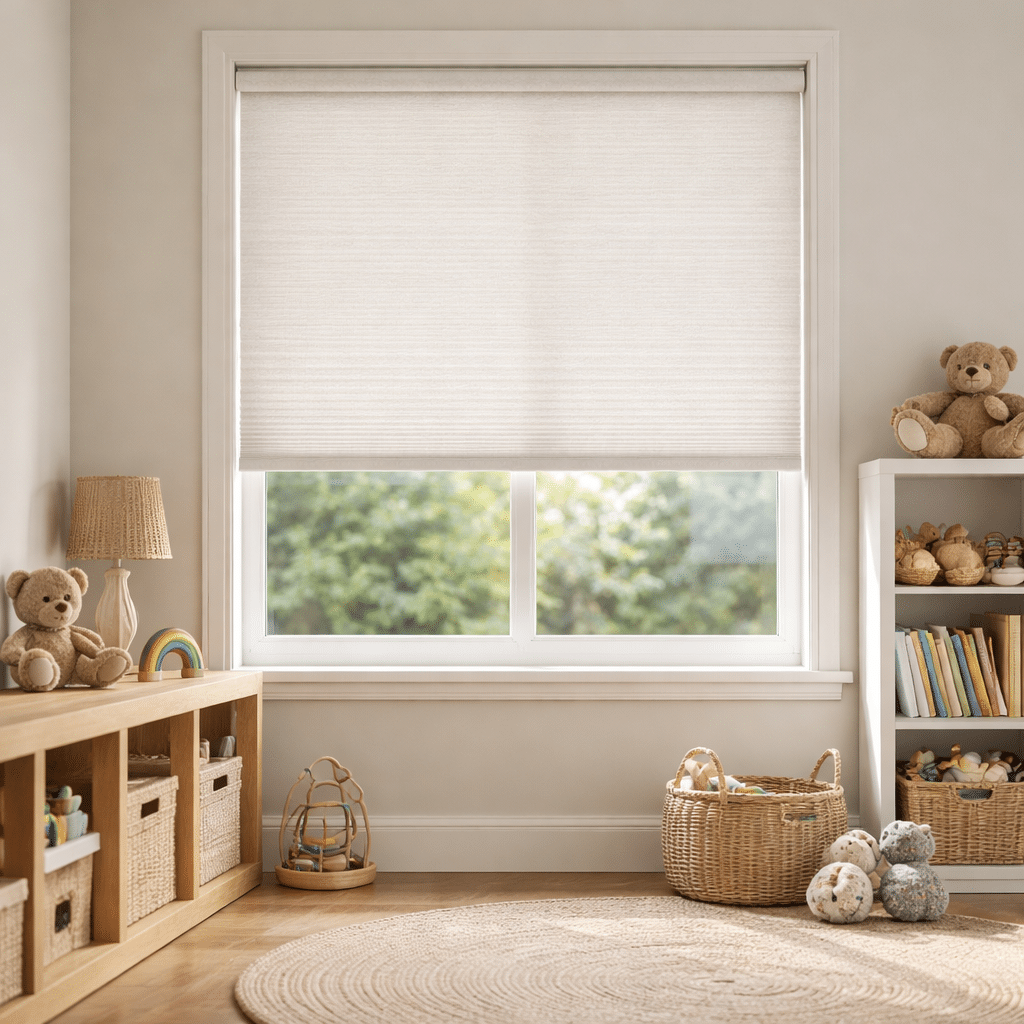
Every parent wants their home to be a haven. But ordinary blinds can hide a deadly hazard. Loose cords and chains have caused injuries and tragedies across Australia. This blog explains why corded blinds are risky and how child‑safe blinds can protect your family.
Definition/overview
Child‑safe blinds are window coverings designed to eliminate or reduce the strangulation risk posed by dangling cords. They use cordless mechanisms, spring systems or retractable wands to keep controls out of reach. According to Consumer Affairs Victoria, one or two Australian children die each year after becoming entangled in blind or curtain cords, and new regulations will soon require landlords to secure cords. The Australian Competition and Consumer Commission warns that loops should be at least 1.6 metres above the floor and any loops must be shorter than 220 millimetres. These standards exist because a child can wrap a cord around their neck in seconds without making a sound. Properly designed blinds eliminate that hazard while still allowing you to control light and privacy.
Why the old way fails / common mistakes
Traditional blinds with long cords seem harmless until you look at the statistics. Curious toddlers can reach cords by climbing on beds, chairs or windowsills. They might pull on a chain while playing, unaware of the danger. Tying cords around a hook or tucking them out of sight is not enough; loops can slip, and tension devices are often placed too low. Many households ignore warning labels or assume accidents happen elsewhere. The ACCC has found that many display homes and rental properties fail to comply with safety standards. Another mistake is thinking child‑safe options are unattractive or expensive. In reality, modern cordless blinds come in many styles and price points. Waiting until an inspection to make changes is risky. It’s better to act proactively.
Core principles
Creating a child‑safe home requires more than temporary fixes. First, remove hazardous loops by choosing blinds without cords or by installing products with concealed rods or wands. If cords remain, ensure they are anchored to the wall with tension devices positioned at least 1.6 metres above the floor and limit loop lengths to under 220 millimetres. The Consumer Protection WA guide emphasises securing cords and keeping furniture away from windows so children cannot climb to reach them. Keep cots, beds and chairs away from windows. Supervise children in rooms with window coverings and teach them not to play with cords. Choose products that comply with Australian safety standards and look for warning labels. Finally, schedule regular checks: ensure tension devices are still secure and cords have not loosened.
Benefits/outcomes
Switching to child‑safe blinds brings peace of mind. You eliminate a silent hazard and ensure compliance with regulations. Landlords avoid fines and protect tenants. Parents can relax knowing that cords are out of reach or removed entirely. Child‑safe blinds are also easy to use and maintain. Without chains they collect less dust and have a cleaner look. Many models use smooth spring mechanisms, which are quiet and reliable. Investing in safety improves the appeal of your home; buyers appreciate safe upgrades just as much as cosmetic ones. Cordless designs can modernise a room and fit any décor. They also eliminate the need to constantly wrap or tie cords, saving time. Ultimately, the benefit is priceless: preventing injuries and saving lives while still enjoying stylish window coverings.
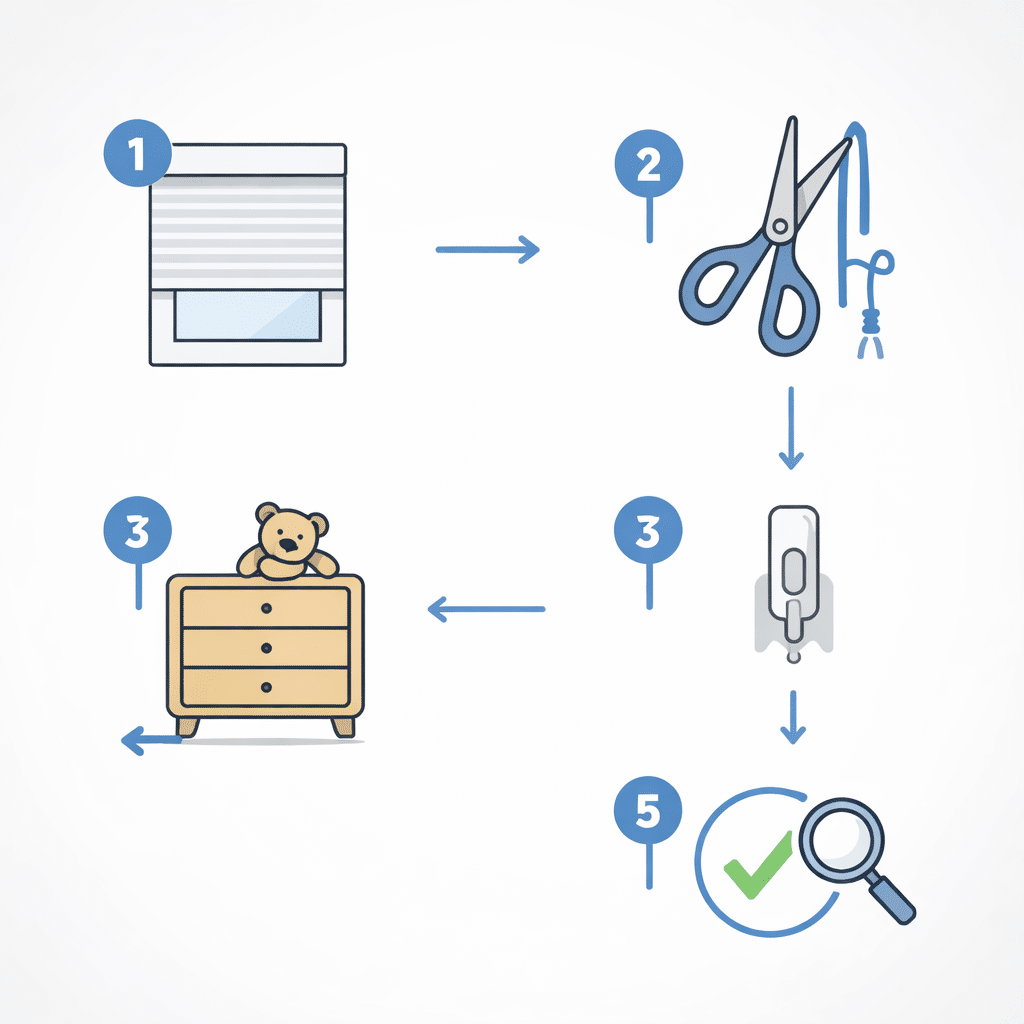
Step‑by‑step implementation
- Audit existing blinds: Inspect every window for dangling cords and loops. Measure cord lengths and heights. Note any cords within a child’s reach.
- Move furniture away: Rearrange cots, beds, chairs and sofas so children cannot climb up to cords or windows.
- Install tension devices: Anchor any existing cords to the wall at least 1.6 metres above the floor. Use cleats or guides designed to keep cords taut and prevent loops.
- Replace dangerous blinds: If cords cannot be secured, replace the entire blind with a cordless or motorised version. Choose from roller, Roman or honeycomb styles to suit your décor.
- Choose safe materials: Select fabrics that diffuse light gently and are easy to clean. Cordless honeycomb blinds offer excellent insulation and a soft look.
- Check compliance labels: Ensure new blinds meet Australian standards and include warning labels. Ask suppliers about safety certification.
- Schedule maintenance: Regularly check that tension devices remain secure and cords haven’t loosened after cleaning or moving furniture.
How Total Blinds helps
Making your home safer doesn’t have to be stressful. At Total Blinds we specialise in child‑safe window coverings that comply with Australian safety requirements. Our consultants visit your home to assess existing blinds and recommend tailored solutions. We offer a range of cordless and motorised blinds as well as soft options like honeycomb shades. For inspiration, explore our child‑safe blinds collection or view our insulating honeycomb blinds. To schedule a free assessment or ask questions, contact us through the contact page. We handle measurement, supply and installation, ensuring tension devices are mounted correctly. With our expertise you can create a safer and stylish home without compromising on design.
Choosing safer blinds is a simple step that delivers enormous peace of mind and meets new safety regulations.
Conclusion
Take action now to protect your children. Speak to Total Blinds to install safe cordless blinds and enjoy peace of mind.
Meta description: Child‑safe blinds remove dangerous cords and meet new standards. Keep kids safe with Total Blinds’ stylish, secure window solutions.
FAQ
Why are corded blinds dangerous?
Loose cords can form loops that pose strangulation risks when children play near them.
How high should cords be secured?
The ACCC recommends securing cords at least 1.6 metres above the floor and limiting loop lengths to 22 centimetres.
Can I convert existing blinds to child safe?
Yes. You can install tension devices, but replacing with cordless blinds is often safer and more convenient.
Do child‑safe blinds limit design choices?
No. There are many cordless styles including roller, honeycomb and roman blinds in various fabrics and colours.
Are landlords responsible for cord safety?
Yes. New regulations require landlords to ensure blinds are safe; tenants can request urgent repairs.