
Understanding Heat Loss and Gain
Heat flows from warm areas to cold areas via conduction, convection and radiation. Windows are thin barriers, so they readily allow energy transfer. Conduction through the glass, convection from drafts and radiation through unprotected panes can together account for a significant portion of heating loss. The Sustainability Victoria window and shading guidance points out that windows can gain or lose much more heat than a well‑insulated wall. Preventing drafts and adding insulation slows this transfer and makes rooms feel more stable in temperature.
Orientation plays a big role in winter comfort. North‑facing windows capture low‑angle sunlight, while south‑facing windows rarely receive direct sun. Use glazing, shading and coverings appropriately: allow sun to enter through northern panes during the day and close blinds and curtains on all windows as soon as the sun goes down. Combined with draught proofing, this reduces reliance on heaters and improves comfort.
Energy‑Efficient Window Treatments
Honeycomb blinds
Honeycomb blinds are among the most thermally effective coverings. Their layered cells trap air and reduce conductive heat loss. High‑quality cellular shades can lower heating energy use by around ten per cent. They also provide a sleek finish and can be matched to most interior styles. If you want to maximise performance, opt for double or triple‑cell fabrics and mount the blind inside the window frame.
Thermal roller blinds
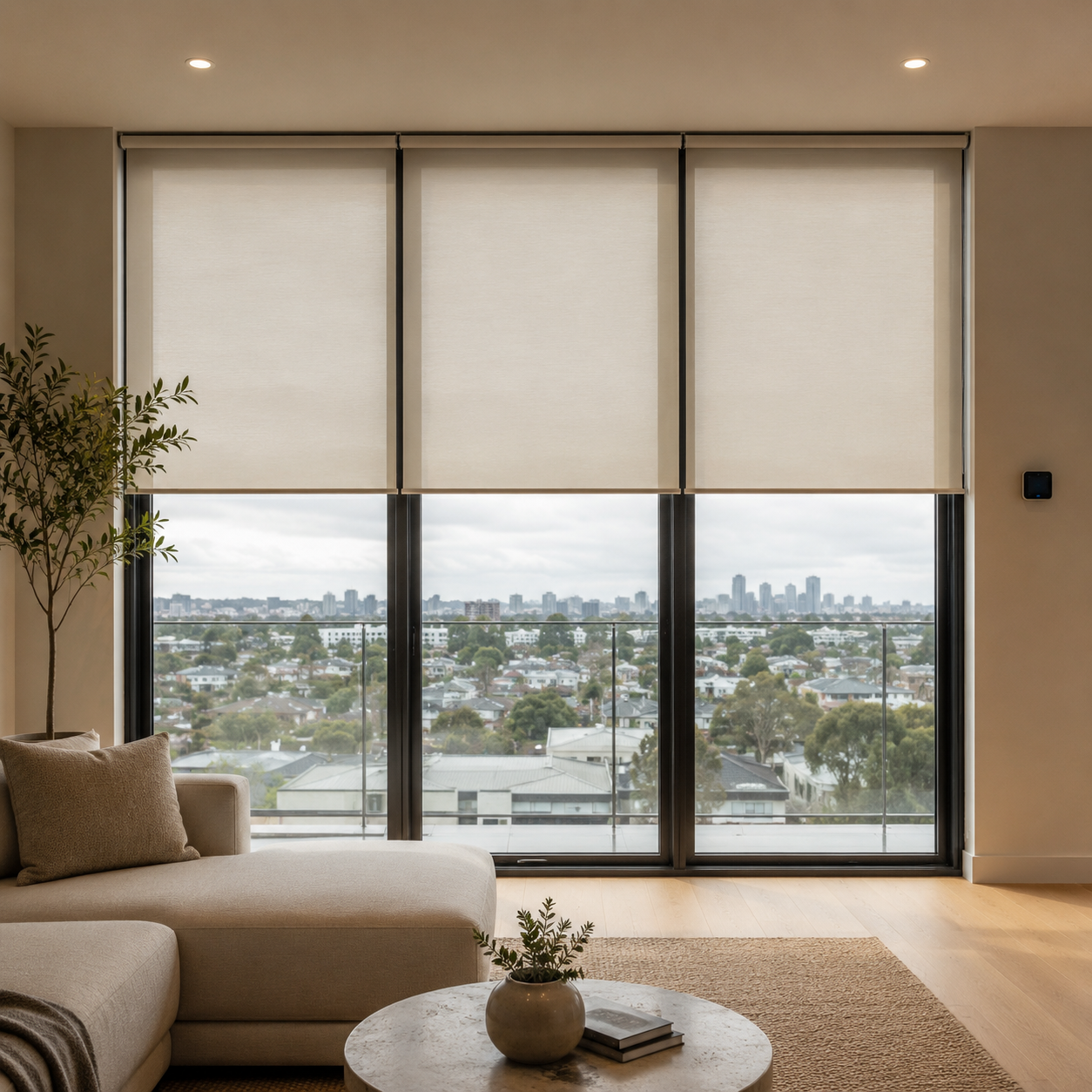
Thermal roller blinds are popular because they’re easy to use and budget friendly. Blockout or reflective coatings on the fabric slow heat transfer, making them suitable for bedrooms and living areas. For renters, roller blinds are simple to install with minimal drilling. You can complement them with sheer curtains to filter daylight while retaining privacy.
Roman blinds
Roman blinds add a decorative element while offering insulation when lined or interlined. They stack neatly when raised and provide a continuous fabric layer when lowered. To achieve the best thermal results, select dense fabrics and ensure the blind overlaps the frame slightly to reduce gaps.
Layering with curtains
Combining blinds with curtains offers the greatest flexibility. Use a thermal blind next to the glass and hang lined curtains outside the recess. The blind forms a tight seal, while the curtains add bulk and prevent drafts from sneaking around the edges. This combination also improves sound insulation and lends a luxurious look.
Draught Proofing and Glazing Upgrades
Even the best blinds can’t fully compensate for gaps and cracks. Studies suggest that nine out of ten Victorian homes have unwanted draughts, and sealing these leaks can stop up to a quarter of winter heat loss. Install weather seals around sashes, apply caulk to gaps and use door snakes to block under‑door drafts. Details are provided in Sustainability Victoria draught proofing advice. These small improvements complement your window coverings and make heating more effective.
Consider upgrading glazing if you’re renovating or building. Double‑ or triple‑glazed windows with low‑e coatings and thermally broken frames greatly reduce conductive heat loss. Although more expensive upfront, they pay off by improving comfort, reducing condensation and boosting the value of your property.
Practical Winter Tips
- Close blinds and curtains at night to reduce up to forty per cent of heat loss through windows.
- Open blinds and curtains during sunny winter days to let in natural warmth, then close them again as soon as daylight fades.
- Set your heater to 18–20 °C to stay cosy without wasting energy. Each degree above that can add around ten per cent to your heating costs, according to the
- Australian Government winter energy tips
- .
- Use door snakes and draft stoppers to block gaps under doors, and install weather seals on windows to minimise cold air infiltration.
- Heat only the rooms you’re using and close off unused spaces to conserve warmth.
Comparing Energy‑Efficient Solutions
|
Solution |
Thermal benefit |
Cost & complexity |
Best for |
|
Honeycomb blinds |
Excellent; layered cells trap air and reduce heat loss |
Mid‑range cost, moderate installation |
Homeowners and long‑term renters |
|
Thermal roller blinds |
Moderate; fabric coating slows heat transfer |
Affordable and easy to install |
Renters and budget-conscious buyers |
|
Roman blinds |
Good; thick fabrics provide insulation |
Moderate cost, simple installation |
Period homes and decorative spaces |
|
Layered curtains & pelmets |
High; heavy drapes and pelmets create a strong barrier |
Varies with fabric and hardware |
Large living areas and bedrooms |
|
Draught proofing & glazing upgrades |
Very high; stops up to 25% of heat loss and improves comfort |
Ranges from cheap DIY to higher-cost renovations |
Homeowners undertaking renovations |
FAQ
How much heat can window coverings save?
Quality window furnishings combined with draught proofing can reduce heat loss through glazing by up to forty per cent. Honeycomb blinds are among the most effective options, followed closely by layered curtains with pelmets.
What’s the best option for renters?
Look for thermal roller blinds or removable honeycomb shades that require minimal fixings. These products offer good insulation without permanent alterations, making them ideal for rental properties.
Do I need both blinds and curtains?
Pairing blinds and curtains provides the best insulation and light control. The blind seals the glass while the curtain covers gaps around the frame, creating a double barrier against drafts and radiant heat loss.
How do I know if my windows are leaking heat?
Feel around the edges of the frame for cold air, look for curtains that move when it’s windy or watch for flickering candle flames near the window. These signs indicate gaps that should be sealed.
What’s an ideal temperature for heating in winter?
Aim for 18–20 °C. Each degree above that adds roughly ten per cent to your energy use. Dress warmly and use blankets to stay comfortable while keeping your heater at an efficient setting.
Conclusion and Call to Action
Improving your home’s energy efficiency starts with the windows. By understanding heat flow, selecting insulated blinds and curtains, sealing drafts and following simple habits, you can enjoy warmth and lower bills through Melbourne’s winter.For tailored advice and installations, reach out to TotalBlinds. Our team offers a free measure and quote, helping you choose the perfect window solutions for your budget and style.
Ready to enjoy a cosier, quieter home? Book your free measure and quote today.