
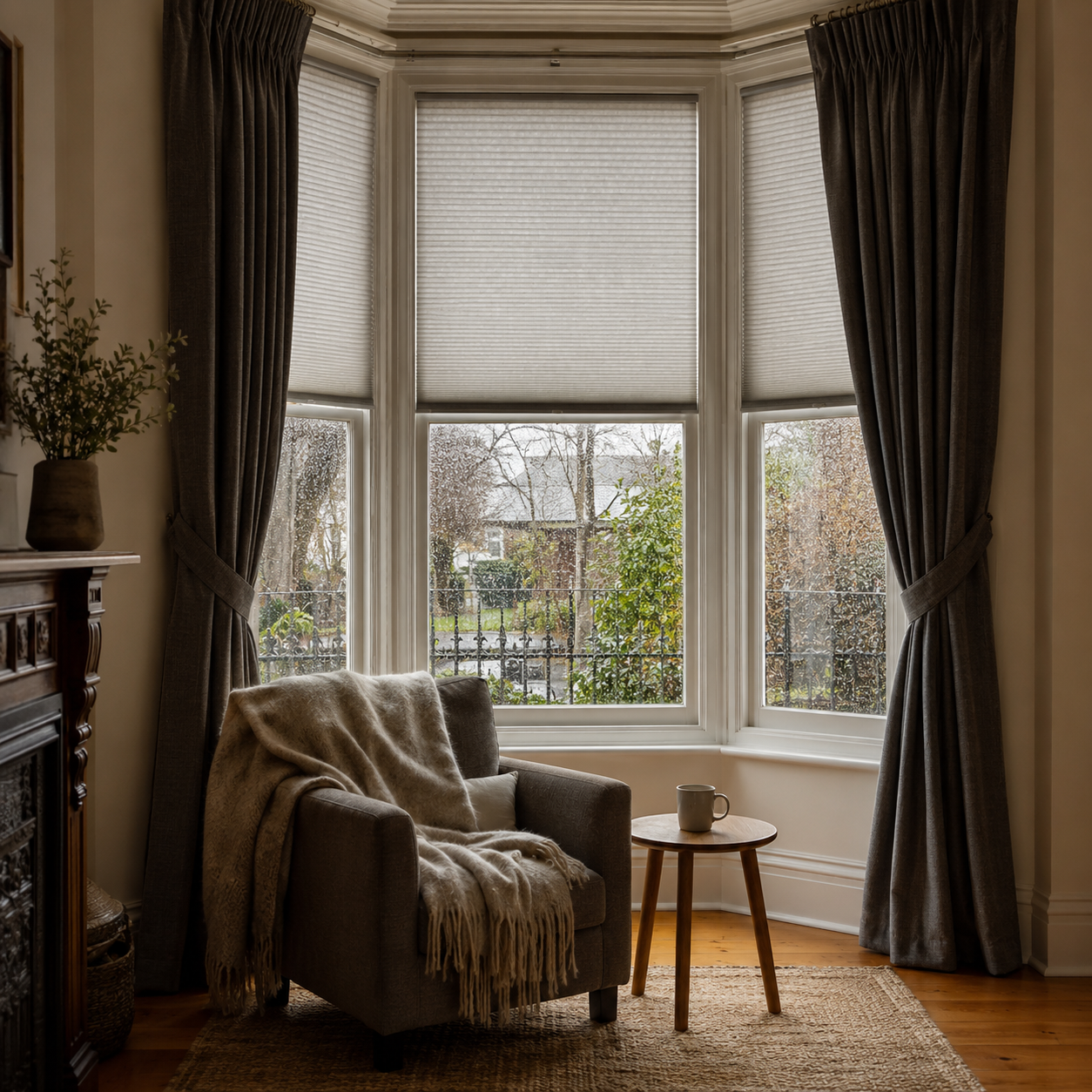
Why Window Furnishings Matter in Winter
Windows are essentially holes in your walls. Even the best glazing offers less insulation than a solid wall, which is why uncovered windows let precious heat escape. According to Australian Government window energy advice, poorly protected glazing can result in a considerable loss of heating energy. That lost warmth gets replaced by cold draughts that make your heater work overtime. Heavy fabrics, insulating cells and well‑fitted coverings add a barrier that reduces heat transfer and cuts down on uncomfortable drafts. When combined with proper draught proofing, insulated window furnishings make a noticeable difference to comfort levels and energy bills.
Your choice of blinds and curtains should suit your room’s style and how you use the space. A layered look using insulating blinds alongside lined drapes creates a pocket of still air near the glass. This pocket slows heat loss, keeps the room warmer, and adds visual softness. Before choosing a product, consider your home’s age, orientation and any heritage features so that the new window coverings complement rather than fight the architecture.
Best Blinds for Winter Warmth
Honeycomb or cellular shades
Honeycomb blinds, also known as cellular shades, are the gold standard for insulation. Their pleated cells trap pockets of air that act as a buffer between the windowpane and your living space. Tests show that quality honeycomb shades can reduce heat loss through windows by around forty per cent, cutting heating energy use by about ten per cent. They come in single, double or even triple‑cell designs and can be fitted tightly inside the window recess for maximum performance. For ease of use, consider motorised options or cordless lifts, which maintain a clean look.
Thermal roller blinds
Roller blinds are a simple, versatile solution that suit modern apartments and family homes alike. When made from blockout or thermal‑backed fabrics, they provide a noticeable boost to insulation by forming a snug barrier over the glass. For rentals and apartments where structural changes are limited, roller blinds are easy to install and affordable. To increase warmth further, layer them under curtains – you can lower the blind for privacy and insulation, then draw the curtains to trap a layer of still air.
Roman blinds
Roman blinds are fabric panels that fold neatly into horizontal pleats when raised. For winter, choose heavier fabrics with thermal linings or interlinings. When lowered, Roman blinds create a thick, continuous barrier against the cold, especially if they cover the frame and overlap slightly at the sides. They complement classic and period homes beautifully and work well when paired with complementary drapes for extra insulation.
Venetian blinds
Venetian blinds feature adjustable slats that allow you to control light and privacy throughout the day. On their own they provide limited insulation because of the gaps between slats. However, timber or composite Venetians can be paired with lined curtains to deliver warmth without sacrificing the ability to tilt the slats for light control. If you enjoy the look of horizontal lines but want better thermal performance, add heavy drapes or pelmets above the blind to reduce drafts.
Curtains and Drapes for Extra Insulation
Curtains are an essential part of any winter window plan. Thick, lined drapes made from fabrics like velvet, suede or wool blends provide a tangible barrier between the glass and your room. When hung close to the window and reaching to the floor, they minimise drafts. Adding pelmets or a boxed pelmet above the curtain rod helps stop warm air circulating behind the fabric. Layering sheer curtains behind heavier drapes allows you to enjoy diffused daylight while retaining warmth at night. For added convenience, consider motorised tracks or soft‑close tracks that make drawing heavy curtains effortless.
Smart Tips for Maximising Warmth
- Seal gaps and drafts around windows and doors with weather stripping, door snakes and caulk. According to
- Sustainability Victoria draught proofing advice
- , sealing unwanted gaps can prevent a significant proportion of winter heat loss.
- Fit pelmets or covered tracks above curtains to prevent warm air from escaping over the top of your drapes.
- Harness the sun by opening blinds and curtains on sunny winter days to allow natural heat in, then close them as soon as the sun sets.
- Keep unused rooms closed off and only heat the spaces you occupy.
- Maintain your heater at around 18–20 °C; each degree higher can increase energy use by up to ten per cent, according to
- Australian Government winter energy tips
- .
Comparing Window Covering Options
|
Option |
Insulation & thermal benefit |
Light & privacy control |
Ideal use |
|
Honeycomb blinds |
Excellent insulation; reduces heat loss through glass by about 40% |
Good when fully lowered |
Homeowners and renters seeking top thermal performance |
|
Thermal roller blinds |
Moderate; blockout fabrics form a snug barrier |
Great for privacy and easy operation |
Renters and modern apartments |
|
Roman blinds |
High when lined; thick fabric blocks drafts |
Effective but need to be raised for sunlight |
Period homes and bedrooms |
|
Venetian blinds with curtains |
Low alone; improves greatly when paired with curtains |
High adjustability via slats |
Living rooms where light control is key |
|
Layered curtains |
High; heavy drapes and pelmets trap warmth |
Varies with fabric weight and lining |
Large rooms and open living spaces |
FAQ
How do blinds and curtains reduce heating costs?
Uncovered glass allows warmth to escape. Insulated blinds and curtains add layers of still air that slow heat transfer. Honeycomb blinds and lined drapes can cut heat loss significantly, which means your heater doesn’t need to run as often.
What are the best window coverings for renters?
If you’re renting, choose options that are easy to install without damaging walls. Thermal roller blinds and removable honeycomb blinds provide insulation and are suitable for most leases. Adding a draught stopper or tension rod curtains enhances performance.
Is it worth combining blinds and curtains?
Yes. Pairing blinds with curtains adds extra layers that trap warm air. A blind creates a tight seal against the glass while curtains add bulk and cover any gaps, making the combination more effective than either alone.
How can I tell if my windows are leaking heat?
Signs of leaks include cold drafts, rattling sashes, or curtains that move when it’s windy. You can perform a simple test by holding a lit candle or incense stick near the frame and watching for flickering. If in doubt, consult a professional for an energy assessment.
What temperature should I set my heater in winter?
For comfort and efficiency, keep your thermostat between 18 and 20 °C. Each degree above that can add around ten per cent to your energy use. Layer clothing and use warm bedding to stay cosy while saving on heating costs.
Conclusion and Call to Action
Insulated blinds and curtains are essential for keeping Melbourne homes warm during winter. By choosing the right window furnishings, sealing drafts and using smart heating habits, you can enjoy a cosy home without excessive bills.If you’re ready to upgrade your window coverings, speak with the team at TotalBlinds. Our experts can help you select and install the perfect blinds and curtains for your space. Book a free in‑home consultation today and discover how stylish solutions can maximise your comfort.
Ready to enjoy a cosier, quieter home? Book your free measure and quote today.