
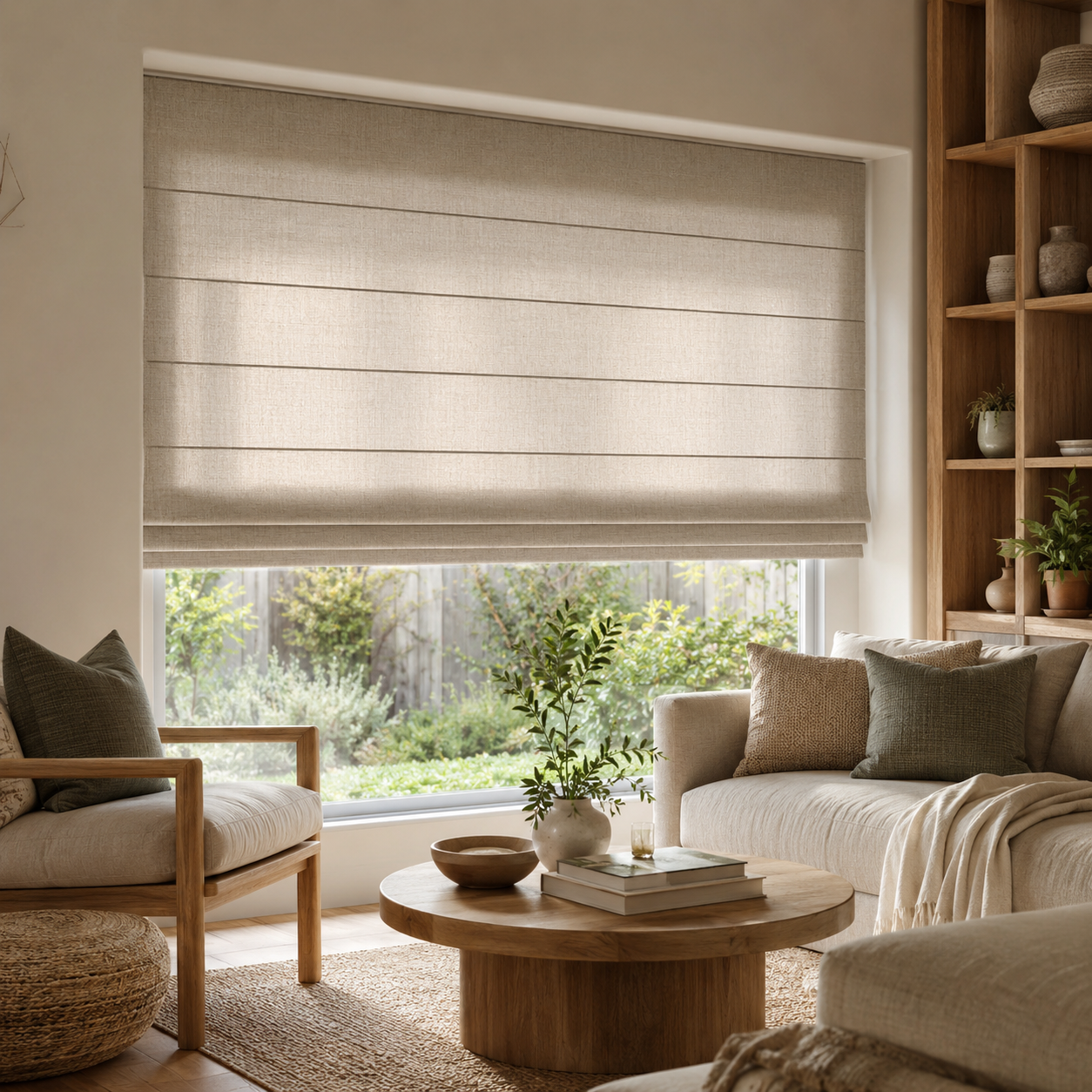
After years of minimalist interiors, Australian design in 2026 is shifting towards warmth, texture and individuality. Natural light is celebrated, but harsh glare and heat are not. Roman blinds have resurfaced as a favourite because they deliver a soft, tailored look without sacrificing function. This article explores why Roman blinds feel current again, where they work best in Melbourne homes and how to select fabrics, folds and finishes that will stand the test of time.
Why Roman blinds feel current again
The latest interior design trends for 2026 show a move away from stark minimalism towards warm, earthy colour palettes and layered textures. Australians are embracing soft neutrals like beige, terracotta and muted greens to create spaces that feel calm and grounded. Roman blinds align perfectly with this aesthetic. Their cascaded folds lend a sense of depth and softness that roller blinds can’t achieve, while the made‑to‑measure construction ensures a neat, tailored finish. When paired with sheer curtains, they contribute to the layered window treatments that designers are favouring. The same trends report notes that motorised window treatments and energy‑smart features are also gaining traction, making Roman blinds with automation more appealing than ever.
Where Roman blinds work best in a Melbourne home
Bedrooms and living rooms
Roman blinds bring a soft elegance to bedrooms and living rooms. In a bedroom they can be lined with blockout fabric to create a snug, hotel‑like ambience while still sitting neatly within the window reveal. In living areas they add texture and warmth without overwhelming the space. Because Roman blinds stack neatly when raised, they suit rooms with high ceilings where you want to preserve the view. Consider pairing them with sheers for daytime softness and privacy. If you’re after a more contemporary look, choose a flat‑fold Roman with minimal stitching. For period homes, a soft fold can echo the curves of heritage features.
Softness without losing function
Roman blinds prove that you don’t have to choose between aesthetics and practicality. They offer excellent light control: you can raise them fully, drop them part‑way or lower them completely to darken a room. When lined properly they also provide insulation. The Department of Energy notes that about 30 percent of a home’s heating energy is lost through windows and that window coverings can help regulate temperatures and reduce energy bills. Choosing a thermally lined Roman blind will help to keep bedrooms warm in winter and cool in summer while maintaining that soft, draped appearance.
How to keep the look tailored, not bulky
Achieving a tailored look is all about proportion and fabric choice. Heavy fabrics or overly long drops can cause Roman blinds to look bulky when raised. Opt for medium‑weight textiles that drape beautifully but don’t balloon. Accurate measuring is essential; the blind should sit within the window recess or just cover the frame without extending excessively onto the wall. A professional measure and quote will ensure the folds stack evenly and that the bottom bar sits level. Finally, consider whether a hidden or exposed headrail will suit your space – a concealed track offers a cleaner look for contemporary rooms.
Blockout versus light‑filtering Roman blinds
Roman blinds can be constructed with a variety of linings. Blockout versions are ideal for bedrooms and media rooms where darkness and privacy are priorities. They often use a foam‑coated lining that helps insulate against heat and cold. Light‑filtering Romans allow natural light to enter while diffusing glare, making them perfect for living spaces and kitchens. If you’re concerned about energy performance, consider pairing a light‑filtering blind with a separate blockout lining or an additional roller blind so you can adjust light and insulation separately. Remember that heavier fabrics typically offer better thermal performance.
Fabric, folds and finish: what changes the look
The choice of fabric will determine both the function and the feel of your Roman blinds. Natural fibres like linen and cotton add casual elegance and pair beautifully with the earthy palettes popular right now. For a sleeker finish, consider a poly‑blend that resists creasing and is easier to clean. Beyond fabric, think about fold style: a flat fold delivers a streamlined, architectural effect; a classic fold introduces gentle curves and softness. Trim options such as contrasting borders or decorative tapes can create a custom look. The key is to complement your existing décor rather than compete with it.
When Roman blinds beat curtains or roller blinds
Roman blinds shine in rooms where you want softness without the volume of curtains. They’re ideal for smaller windows or where space beside the window is limited. In a minimalist kitchen or bathroom, a moisture‑resistant Roman in a light fabric can provide privacy without the fuss of a full curtain. Compared with roller blinds, Romans offer more texture and sophistication. They sit particularly well in period homes where their folds echo traditional detailing, yet they also suit contemporary apartments when designed with clean lines. If you love the tailored look but want more versatility, consider installing Romans on the lower sash and sheers above.
How Total Blinds helps
Our team at Total Blinds understands that selecting the right Roman blind involves more than just picking a colour. We begin with an in‑home consultation to assess your rooms, measure each window precisely and discuss your goals for light control, privacy and style. We’ll show you fabric swatches, explain the difference between blockout and light‑filtering linings, and help you decide on fold style and finish. If you’re considering automating your Romans, we can integrate them with our motorised blinds range so you can adjust them with a remote or app. We also take child safety seriously and can recommend compliant designs and installation methods. To explore our full range of interior blinds, visit our Roman Blinds Melbourne page or contact us to arrange a free measure and quote.
FAQ
Can Roman blinds be motorised?
Yes. Many Roman blind systems can be fitted with small motors so you can raise and lower them at the touch of a button. Motorisation is especially useful for larger blinds or hard‑to‑reach windows. At Total Blinds we offer integrated solutions that can be controlled via remote, smartphone or smart‑home system.
Do Roman blinds provide good insulation?
When lined correctly, Roman blinds offer a surprising amount of insulation. A blockout or thermal lining creates an extra layer of fabric that reduces heat transfer. According to energy‑saving advice from the Department of Energy, window coverings help regulate temperatures and reduce heating and cooling costs. For maximum performance, choose a well‑fitted blind and consider pairing it with secondary window treatments.
Are Roman blinds safe for homes with children?
I
Like any corded window covering, Roman blinds must be installed safely. Make sure cords and chains are kept out of reach and that any loops cannot form below 160 cm from the floor. You can also choose a cordless or motorised system for peace of mind. For more information on child safety, refer to the Queensland Government’s child‑safety guidelines and explore our child‑safe window blinds page.
Roman blinds can transform the feel of a room when chosen carefully. Compare fabric, fold style and light control for each space before making a decision, then speak with our team to arrange a free measure and quote. We’ll help you create a tailored look that brings warmth and softness to your Melbourne home.
Ready to enjoy a cosier, quieter home? Book your free measure and quote today.